
Health
Gilbertov Guide to Mild Jaundice
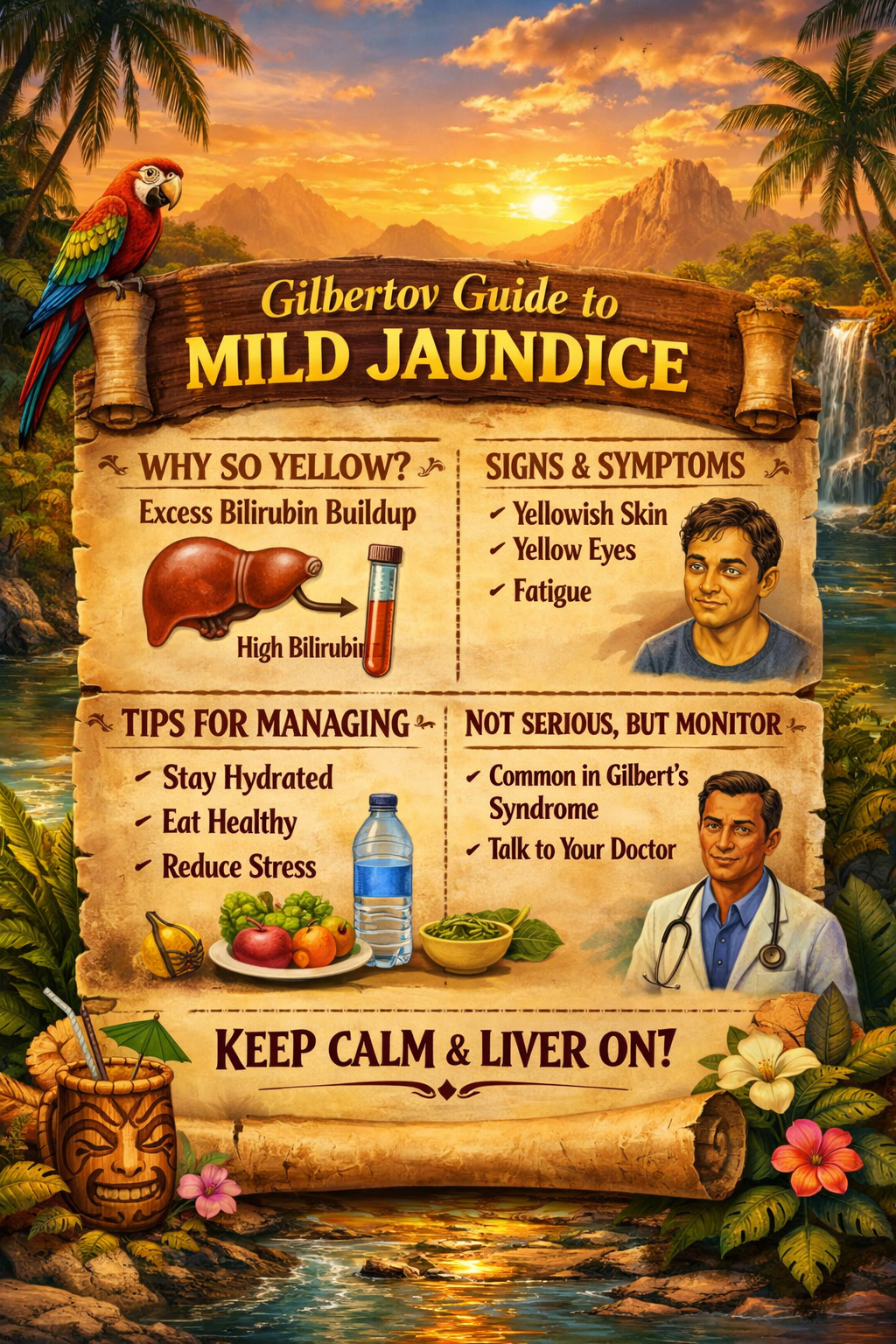
Gilbertov mild jaundice may be unexpected when it gets you particularly when you feel well in general. This disorder in most instances is associated with Gilbert syndrome, a widespread and benign hereditary liver disorder. This handbook is known as Gilbertov Guide to Mild Jaundice, which works out what mild jaundice is, why it occurs and how individuals can live a normal life with it.
Knowledge Mildred Jaundice
Jaundice is a disease in which the skin or the whites of the eyes could be slightly yellow. This yellowing occurs due to a substance in the blood known as bilirubin which is formed as a result of the breakdown of red blood cells which occurs naturally. As usual, the liver takes up the bilirubin and gets it out of the body.
The liver in individuals with Gilbert’s syndrome functions slightly slower in the processing of bilirubin. Consequently, there is a risk of accumulating bilirubin in the blood, which causes non-persistent and mild jaundice. This does not harm the liver and does not result in severe illness.
What Is Gilbert’s Syndrome?
Gilbertov syndrome is a hereditary disorder. It prevents the bilirubin processing of the liver but does not disrupt other liver functions. Some individuals with this condition are not even aware that they have the condition until a routine blood test reveals that they have slightly high concentrations of bilirubin.
It is a rather widespread state that is frequently found during teenage hood or at the beginning of adulthood. Significantly, Gilbertov syndrome is deemed harmless implying that it is not a threat and may not need treatment.
Normal Etiologies of Mild Jaundice
Patients affected with Gilbertov syndrome would observe that mild jaundice is evident in some cases. Common triggers include:
- Fasting or skipping meals
- Dehydration
- Stress or anxiety
- Lack of sleep
- Illness such as a cold or flu
- Heavy physical exertion
These provisional elevate bilirubin levels. Bilirubin level usually returns to normal upon passing of the trigger.
Symptoms to Expect
The majority of patients with Gilbertov syndrome have no symptoms whatsoever except slight yellowish coloring of the skin or eyes. Some may also notice:
- Fatigue
- Mild weakness
- An infrequent stomach ache.
Symptoms are normally not serious and of short duration. The syndrome of Gilbertov does not lead to liver pain, scars, and chronic complications.
Diagnosis and Awareness
Diagnosis Gilbertov syndrome is usually done in a simple blood test which indicates an increase in bilirubin with normal liver enzymes. Before delivering the diagnosis, doctors can complete other liver tests to eliminate other liver causes.
On diagnosis, it is important to know the condition. The knowledge that mild jaundice is not harmful may help to decrease fear and anxiety, which in their turn serves to maintain bilirubin levels at normal levels.
Wellness With Gilbert Syndrome
Gilbert syndrome mild jaundice is normally easy to live with. The art of living little can produce great effect:
- Eat regular, balanced meals
- Consume a sufficient amount of water during the day.
- Deal with stress through relaxation.
- Have a regular sleeping routine.
- Avoid extreme dieting
It does not need any special medication. The majority of individuals with Gilbert syndrome have normal lives with no limitations.
Why Awareness Matters
Awareness and reassurance is the aim of the Gilbertov Guide to Mild Jaundice. Mild jaundice may be alarming, although, with Gilbertov syndrome, it is not an indicator of cirrhosis or a severe condition. The awareness of the condition results in people being assured and knowledgeable about their health.
Frequently Asked Question (FAQs)
Q: Is Gilbertov syndrome dangerous?
No. Gilbert syndrome is non-invasive and does not injure the liver or reduce life expectancy.
Q: Is mild jaundice an indication of liver failure?
Not in Gilbert’s syndrome. Liver is good; it merely has a slow rate of processing bilirubin.
Q: Is Gilbertov syndrome cureable?
It is incurable, since it is genetic, however, it does not require treatment.
Q: Will general mild jaundice always be present?
No. It usually comes and goes, and it is triggered by such factors as stress or fasting.
Q: Is it possible to have normal lives of people with Gilbert syndrome?
Yes. The majority of the population leads normal and active livelihoods.
Summary
The Gilbertov Guide of Mild jaundice demonstrates that mild jaundice associated with Gilbert syndrome is a treatable and non threatening disease. The majority of the population has minimal or no inconvenience in their lives with a basic level of awareness and healthy routine. The knowledge of the condition will make fear a thing of the past and make people concentrate on their well-being instead of being worried.