
information
Speciering: Origins of a New Species Line
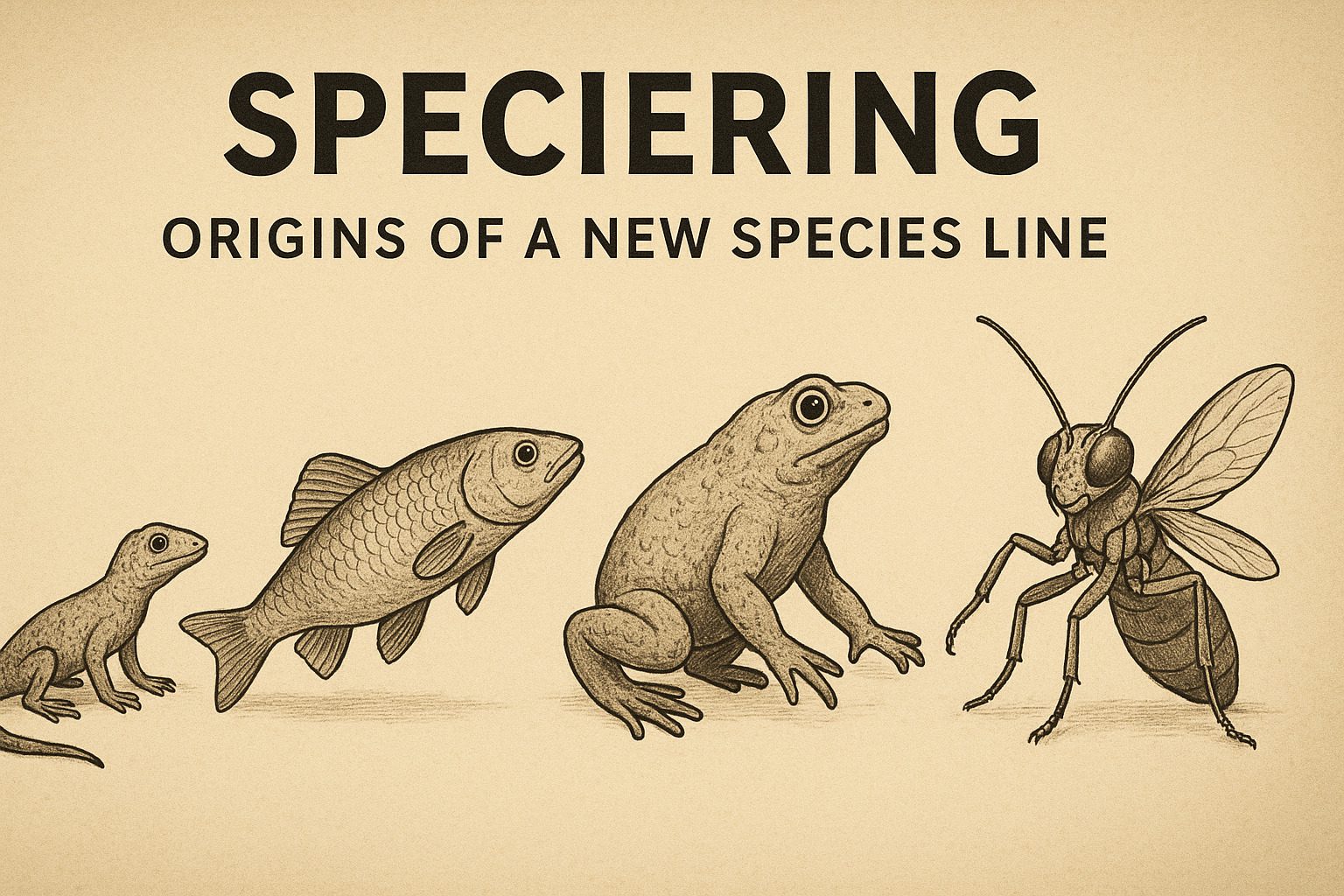
Speciering is the great process by which new species are formed and grow and ultimately become different organisms. It is based on the evolutionary biology, which explains that populations evolve and separate across time, and is based on the environmental pressures, genetic differences, behavior, and the survival pressures. Though evolution has been believed to be a slow and consistent process, it is possible to undergo speciering at a rapid pace under certain ecological factors particularly when groups of life are exposed to novel environments, competition and climatic conditions.
Speciering at the most is concerned with change, not merely with physical change, but also with behavior change, and ecological and genetic adaptation. The changes are sustained over the generations to the point that a group turns genetically incompatible with their ancestors. As soon as this wall is created, a scientist identifies the emergence of an entirely new species line. This process is important in determining the biodiversity of the earth and today there are millions of species that inhabit the earth.
The Forces that drive the creation of new species
Populations are driven toward speciering by a number of forces. Geographical isolation is one of the most important ones. Where people are segregated by mountains, rivers, climatic changes or migration, they develop separately. These geographically isolated groups evolve distinct features that are not similar to their ancestry over thousands or millions of years.
The other significant force is natural selection. Those who survive better in a certain environment transmit the beneficial features to the next generations. All these become a collection of traits and form specific evolutionary directions. It is equally critical that mutation, genetic drift, and sexual selection are also factors that determine the characteristics of a new species.
Speciering is also enhanced by ecological differentiation. The adaptation to the environment is unique when organisms feed on various sources of food, behaviors or ecological niche. There are even instances of species that diverge in the same region provided they have a difference in ways of life.
Ways to the Birth of a new Species Line
The process of speciation takes place via several directions, and each is showing the intricacy of the evolution of life. The most widespread usually is allopatric speciation in which populations are segregated by geographical barriers. A river separating a population of insects can, as an example, cause two distinct populations of insects to evolve separately.
Sympatric speciation on the other hand occurs without physical segregation. This may be by alteration of behavior like mating preference, food sources or mode of activity. Gradually, the differences will diminish interbreeding until the populations become exhaustive of different species.
The other route is parapatric speciation in which the populations living adjacent to each other diverge as a result of differing environmental influences or selection pressures. Although such groups might continue to meet, they end up being dissimilar to the extent that they cannot interbreed.
Whichever the route, the moment has come, when reproductive isolation is created – when two populations become unable to have fertile offspring. A new line of species has now come into existence.
The importance of Speciering to the Future of Life
The future of biodiversity cannot be understood without understanding speciering. With climate change, habitat destruction and human expansion disrupting the ecosystems, species are forced to adapt or become extinct. The understanding of the birth of new species can assist the scientists to forecast the way some organisms might react to changes in the environment.
Speciering is also used to clarify why biodiversity hotspots (areas which have high concentrations of species) tend to occur in either isolated or heterogeneous settings like islands, rainforests and mountain ranges. These regions promote severe evolutionary forces, which result in swift diversification.
Also, speciering emphasizes the permanence of life. With the disappearance of the species, there are always new species taking its place and redefining the evolution story. Despite the contemporary dangers of biodiversity depletion that dismays at a terrifying pace, there is still speciering that dictates the future of life, silently, inexorably, and forcefully.
Frequently Asked Questions (FAQs)
Q: What is it specifically that causes speciering?
Speciering is brought about by genetic changes that happen over time as a result of isolation, natural selection, environmental forces as well as differences in behavior.
Q: What is the time of formation of a new species?
It varies greatly. There are species that are formed over millions of years, whereas other species may be formed in the course of several thousand years or even in the course of hundreds when the selection pressures are very strong.
Q: Is there speciering that man can observe in action?
Yes. In insects, plants and fish scientists have seen rapid speciation particularly in environments where there are significant ecological changes occurring.
Q: Is speciering ever practised to-day?
Absolutely. With changes in the environment, species constantly evolve, diverge and develop new evolutionary lines.
Q: So what is the significance of knowing about speciering?
It assists us in getting to know biodiversity, protecting habitats, and how species can survive in new environmental conditions in the future.
Result
The basis of life diversity is speciering or the amazing process of development of new species and their evolution. We learn more about the complexity and adaptability of living things by studying its origins, pathways, and environmental drivers. With the world in constant flux, the need to comprehend speciering more than ever before, speciering will provide people with insights on how life can survive, evolve and flourish across generations.