
Lifestyle
Hormita Ecosystems and Natural Harmony
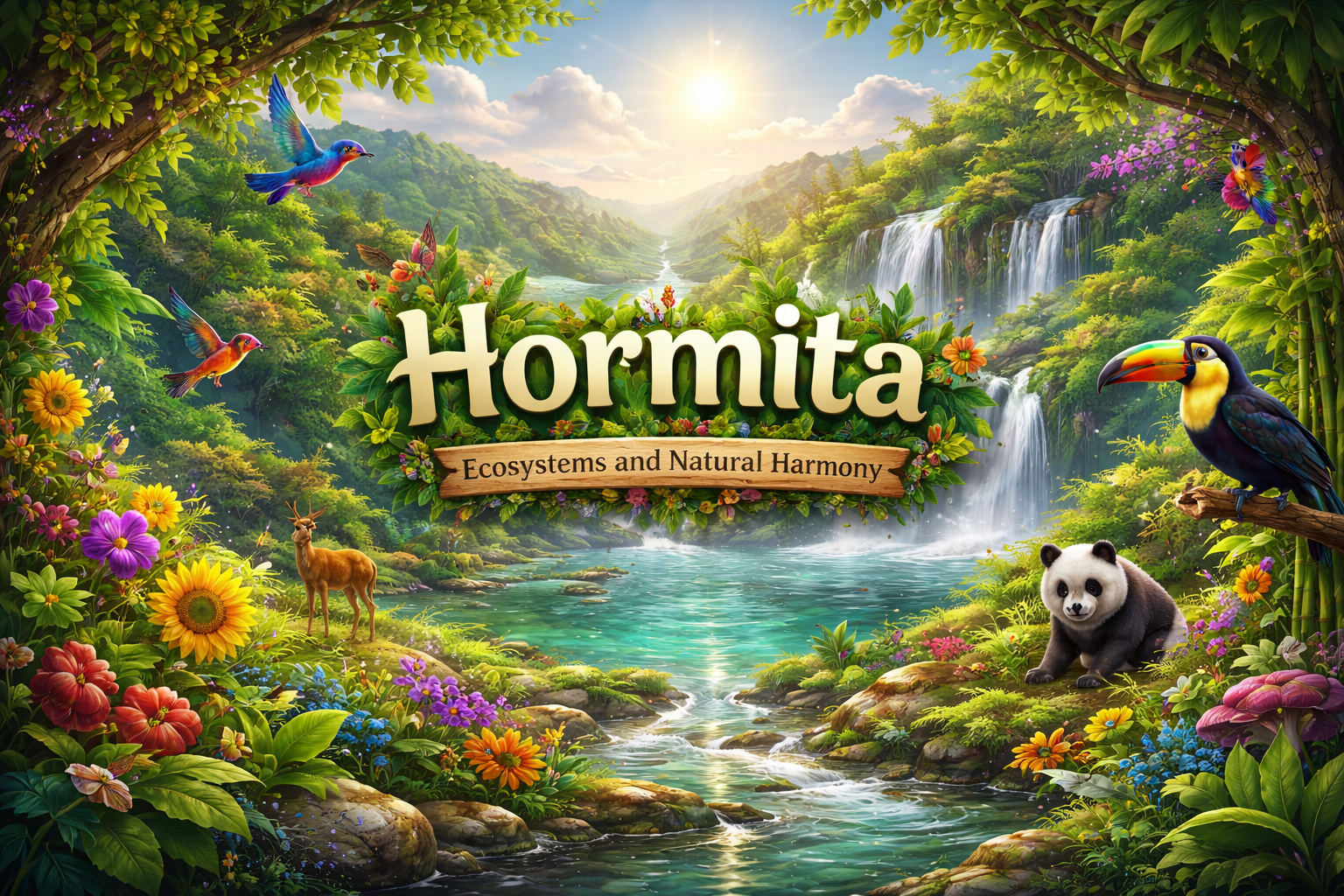
Hormita ecosystems exemplify the process of nature with the most subtle systems in which all organisms, components, and processes have their role. One of such systems is the Hormita ecosystem which is characterized by a special ecological concept that focuses on balance, interdependence, and sustainability. Hormita can be defined as an ecological unit, or system, which plays an active role in the process of ensuring harmony in its habitat. Instead, Hormita ecosystems are based on co-existence between living organisms and the environment.
Knowledge about Hormita Ecosystems
The stability of the natural ecosystem is a feature of the Hormita ecosystems. These systems can also be located in forests, wetlands, grasslands and even the micro-ecosystem like the soil layers or the waters. It is not a single species, but it is a network of interactions that provide equilibrium.
Plants, microorganisms, animals and natural resources are interacting in a Hormita ecosystem. One part sustains the other creating a cycle of growth, decay, renewal and balance. The compensation of one element weakens, and other elements adapt to save an environmental meltdown.
The Hormita in the harmony of nature
Natural harmony is achieved when the ecosystems are self-regulated and are not disturbed by outside factors. The Hormita ecosystems add to this harmony in a number of critical ways:
- Resource balance: Nutrients, water and energy are recycled effectively.
- Population control: There is a balance in the population of a species by checks and balances.
- Environmental resilience: These ecosystems are more resilient to natural disturbances like drought, storms etc.
With balance, Hormita systems minimize extreme conditions in the environment and contribute to the long-term ecological well-being.
Interdependence and Biodiversity
One of the main characteristics of ecosystems of Hormita is biodiversity. The different ecosystems are more resilient due to the fact that they are dependent on more than one species to play the same role. When a certain species becomes extinct, it can be replaced by another. This redundancy enhances resilience and eliminates ecosystem collapse.
It is also important that they are interdependent. An instance of this is that plants supply food and oxygen, insects enhance pollination, microorganisms enhance soil nutrients and animals aids in dispersing seeds. Hormita ecosystems emphasize the fact that life is maintained not only by competition but also through cooperation.
Ecosystems and Climate Balance: Hormita
Hormita systems are also important in climate control. Forest-based Hormita ecosystems trap carbon dioxide, control temperature changes and control rainfalls. Wetland Hormita systems purify water, keep off flooding and carbon storage in soil.
With the increase in climate change, eco systems that can act as a Hormita model are more useful. Their inherent performance lowers the stress on the environment and helps it to maintain the climate without human artificiality.
Disruption of human impact and Hormita
Hormita ecosystems are susceptible to human actions even though they are resilient. Pollution, deforestation, excessive exploitation of the resources, and urban sprawl interfere with the natural cycles. With the destruction of these systems, there is a breakdown of harmony, soil erosion, extinction of species, and the unbalanced climate.
Knowing about Hormita ecosystems makes people act more responsible towards the environment. These natural systems are preserved through sustainable use of land, conservation initiatives and less pollution which restore order.
Preservation in support of Hormita
Conservation of Hormita ecosystems needs to be an awareness and action. Some of the conservation measures include:
- Conserving natural environments.
- Promoting biodiversity
- Minimizing chemical pollution.
- Encouraging sustainable agriculture.
Human activity can be made to be in line with the natural processes and by doing this there is the possibility of coexisting with the ecosystems and not being the master of them.
Hormita as a Sustainability Model
Other than ecology, Hormita ecosystems provide an example of sustainable thinking. They show the ways in which balance, cooperation and adaptability can bring success in the long run. The lessons of Hormita ecosystems are very useful in human systems whether related to environmental policy, community planning, or education.
FAQs
Q: But what is meant by Hormita in ecology?
It is an ecological term that explains the systems in which relationships are in balance and harmony among the natural processes that depend on each other.
Q: Are the ecosystems known as Hormita everywhere?
Yes there are Hormita-like systems which can be found in forests, in oceans, in wetlands, in soils and even in micro-ecosystems.
Q: What is the significance of the Hormita ecosystem?
They stabilize the environments, sustaining biodiversity, climatic regulation and making ecosystems resilient.
Q: Is it possible to develop Hormita ecosystems by humans?
They are not entirely designed by humans, and people can contribute to their maintenance and repair with the help of ecological practices.
Q: What is the relationship between Hormita and sustainability?
Hormita ecosystems are efficient in terms of resource utilization, balance and flexibility which are central tenets of sustainability.
Conclusion
Harmony of nature is Hormita ecosystems, where people cooperate, diverse, and strong, the balance is established. These systems make us remember that nature does not prosper when we control it, but when we relate to each other. Having known and preserved Hormita ecosystems will allow humanity to contribute to environmental stability, fight against climate problems and to live in a more sustainable future based on harmony with nature.